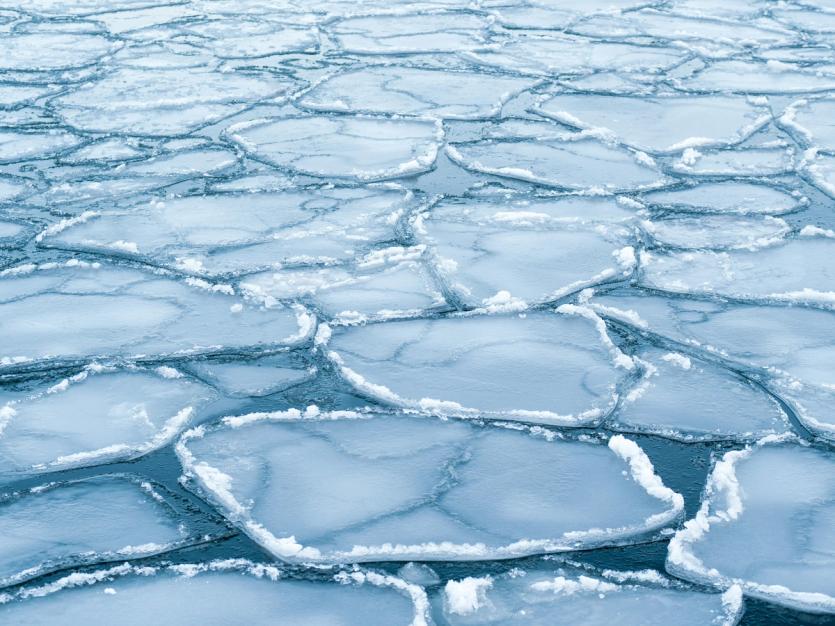
CASUALTY INFORMATION 121: This year, one of the most demanding Baltic ice winters in recent memory is taking shape. Rapidly changing ice conditions, shifting traffic restrictions and increased icebreaker assistance mean that masters and owners must monitor official ice information closely.
This article outlines the key guidance, authoritative resources and SAR contacts needed for safe navigation.
Key guidance, official resources & SAR contacts
Winter in the Baltic Sea brings some of the world’s most dynamic and rapidly changing ice conditions. Even for experienced masters, navigating in the Gulf of Bothnia, the Gulf of Finland, or the Gulf of Riga demands preparation, reliable information, and close coordination with national ice services and rescue authorities.
With this in mind, Norwegian Hull Club would like to take this opportunity to respectfully remind its valued clients that shipowners must always notify their leading underwriter before entering any conditional or excluded area, as required under their policy terms (e.g., NMIP Clause 3‑15);
This newsletter provides practical guidance, official ice‑information links, and relevant SAR resources to support safe and efficient Baltic winter operations.
1. Situation overview – Baltic ice winter 2026
The 2026 season has produced rapidly forming ice, particularly in the Bothnian Bay, the Bothnian Sea, and the Gulf of Finland. Recent updates show:
- Fast ice ranging 25–70 cm in the northern Gulf of Bothnia;
- Consolidated ice, ridging, and brash ice in many fairways;
- Icebreaker assistance restrictions updated weekly, with varying minimum ice classes (IA, IB, II) and deadweight requirements.
(From Baltice.org daily ice reports) [baltice.org]
Masters should anticipate convoy operations, waiting times, and dynamically shifting fairway routes throughout February and March.
2. Essential official ice‑information sources
Below are the primary and authoritative national sources used by pilots, VTS, and icebreaker services in the Baltic region.
Finland – Finnish Meteorological Institute (FMI)
- Baltic ice charts (daily)
https://en.ilmatieteenlaitos.fi/ice-conditions
Provides colour and B/W charts, icebreaker positions, assistance restrictions, and daily ice extent.
Sweden – Swedish Ice Service (SMHI)
- Daily ice analysis, ice drift forecasts, traffic restrictions
https://www.smhi.se/en/services/scandinavian-waters/swedish-ice-service
Comprehensive ice charts and the Baltic ice code.
Baltic Sea Ice Service – Pan‑Baltic (BSIS)
- Joint German–Finnish–Swedish–Estonian ice service portal
https://www.bsis-ice.de/
Includes FMI/SMHI/BSH composite charts, weekly SST, and the latest ice report.
Baltice.org – winter navigation portal
- Daily ice reports, assistance restrictions, icebreakers, fairway info
https://www.baltice.org/weather/
Primary operational source for winter navigation in Finland, Sweden, and Estonia.
3. Port & fairway planning – key considerations for masters
Before entry into ice‑affected waters:
- Check minimum ice class, engine power requirements, and any updated assistance restrictions (IA/IB/II thresholds vary weekly);
- Review convoy schedules, VTS reporting points, and recommended fairways for your port of destination;
- Expect displaced navigation marks, pressure ridges, and narrow brash-filled channels;
- Confirm pilot boarding arrangements in ice – often relocated closer to land.
Operational best practices:
- Keep propulsion within the ice‑breaking power band – avoid full–idle cycles;
- Avoid high RPM astern and never 'grind' the propeller if beset;
- Maintain safe distance in convoy to prevent brash build‑up between vessels;
- Use searchlights and assign an additional lookout during night operations.
4. Recommended SAR & emergency resources in the Baltic
Finland – Finnish border guard (Rajavartiolaitos)
- Maritime SAR information: https://raja.fi/en/maritime-search-and-rescue
- JRCC Turku oversees SAR for the Finnish SRR, including the Gulf of Finland and Gulf of Bothnia.
(Finnish SAR responsibilities referenced in FMI ice service context)
Sweden – Swedish Maritime Administration (SMA)
- Maritime and Air Rescue: https://www.sjofartsverket.se/en/search-and-rescue1/
- JRCC Sweden coordinates SAR across Swedish waters and ice‑covered fairways.
(Swedish ice service and traffic restrictions connected to SMHI operations)
Estonia – Estonian Police & Border Guard Board
- Maritime rescue coordination (JRCC Tallinn): https://www.politsei.ee/en/instructions/search-and-rescue-operations
- Responsible for SAR in the eastern Gulf of Finland and northern Baltic Sea.
Germany – BSH / German Maritime Rescue Service
- Maritime rescue: https://www.seenotretter.de/en/
- Relevant for southern Baltic approaches; closely linked with BSH ice service.
(BSIS hosted by German Ice Service at BSH) [bsis-ice.de]
Latvia & Lithuania
- Latvia MRCC Riga: https://www.mrcc.lv/en
- Lithuania MRCC Klaipėda: https://www.globalsarhub.com/mrcc.php?mrcc=MRCC-Klaipeda
Poland
- Polish Maritime SAR Service (SAR Polska): https://www.sar.gov.pl
5. Practical advice for owners, masters & DPAs
- Align your voyage planning with daily updated ice charts and traffic restrictions – conditions change within hours;
- Ensure your vessel meets mandatory minimum ice class and any seasonal power requirements before entering affected areas;
- Shipowners must always notify their leading underwriter before entering any conditional or excluded area, as required under their policy terms (e.g., NMIP Clause 3‑15);
- Maintain documentation of compliance with icebreaker orders – this is a condition in many hull & machinery placements;
- Prepare for slower SAR response in heavy ice. Tugs and icebreakers may be the primary response units;
- Establish a clear bridge–engine room communication protocol for ice legs, including engineer on the bridge;
- Review and test your towing arrangement before arrival in ice zones.
6. Useful operational links (quick reference)
FMI Ice Charts
https://en.ilmatieteenlaitos.fi/ice-conditions
SMHI Ice Service
https://www.smhi.se/en/services/scandinavian-waters/swedish-ice-service
Baltice Daily Ice Reports
https://www.baltice.org/weather/
Baltic Sea Ice Service (BSIS)
https://www.bsis-ice.de/
Finnish SAR
https://raja.fi/en/maritime-search-and-rescue
Swedish SAR
https://www.sjofartsverket.se/en/search-and-rescue1/
Estonia SAR
https://www.politsei.ee/en/instructions/search-and-rescue-operations
Latvia MRCC
https://www.mrcc.lv/en
Lithuania MRCC
https://www.globalsarhub.com/mrcc.php?mrcc=MRCC-Klaipeda
Poland SAR
https://www.sar.gov.pl
Norwegian Hull Club wishes you all fair winds and following seas.