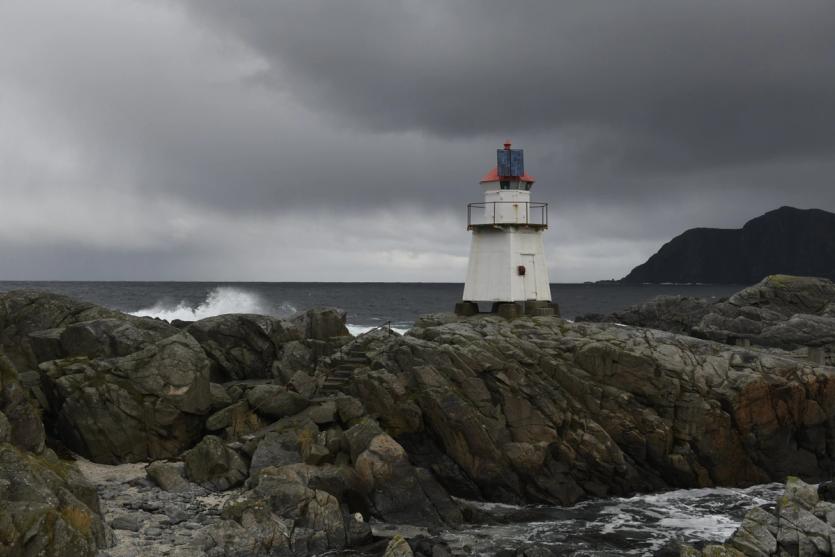
Since the 1830s, when owners first found mutuality to be the answer to securing risk capital, the Norwegian marine insurance business has grown immensely. A constant throughout has been– in one form or another - Norwegian Hull Club.
This is the story of a global leader in marine and energy insurance; a solutions and services provider that has adapted to meet both the demands of today and tomorrow.
High ethical standards
The first permanent Norwegian associations were set up towards the end of the 1830s, which was a period of growth in shipping and shipbuilding in the country. Jacob All was the man who largely defined the insurance philosophy behind mutuality. He created a straightforward and transparent insurance model, with local associations that prioritised solidarity and high ethical standards. This model is still in use today – Norwegian Hull Club, as a mutual insurer, delivers first-class service and solutions based upon its primary core value of integrity.
By reducing financial risks and spreading losses among multiple stakeholders, these early associations were innovative in providing a measure of security and the prospect of financial expansion in the shipping sector.
Even with the rise of private insurance companies, the mutual associations survived. One of these was Langesundsfjordens Skibsassuranceforening, later renamed Unitas. With its creation in 1837, the foundations of Norwegian Hull Club were laid.
The turning point
Norwegian shipping achieved its international breakthrough around the middle of the 19th Century when the fleet increased almost sevenfold. This growth followed periods of industrialisation, liberalisation, free trade and the Crimean War. There was an expansion in the scope of voyages, from domestic routes between Norwegian and foreign harbours to journeys departing from and arriving at overseas ports.
This growth also presented challenges, including varying quality in vessel standards, increased value of objects insured, as well as ships setting sail without proper checks by owners or insurers.
A new industry standard
As a result of these newfound challenges, an improved overview of risks was demanded. There were also calls for standardisation and more specialised regulations for assessing the quality of vessels. Thanks to the efforts of the associations, the classification society Det Norske Veritas was formed in 1864. Its purpose was, and remains to this day, to safeguard life, property and the environment through a uniform set of rules and procedures.
From sail to steam
The introduction and breakthrough of steamships in the 1870s revolutionised shipping and trade. Steamships enabled cargoes to be transported quickly and reliably; it was soon decided that first-class steamers could be insured.
Reacting to these industry changes, Bergen Assuranceforening – which would become Skibsassuranseforening (Bergen Hull Club) in 1937 - stopped providing insurance for sailing ships in 1896.
A world at war
In 1849, Første Norske Assuranceforening decided that insurance against war risks could be discontinued if Norway became actively involved in a war and the ship was moored in a Norwegian or allied harbour. Ships at sea would continue to enjoy coverage until they reached a harbour of this kind. This was the first instance of differentiating war insurance of vessels based on whether Norway was neutral or at war. Up until then, most of the associations had included war risks in their articles.
The turning point happened in 1914 with the outbreak of the First World War. The majority of the Norwegian fleet was not covered by insurance during wartime, which caused separate mutual associations to take over and provide nationwide coverage. This resulted in stagnation for the associations, who by this time had become numerous and vulnerable.
Stronger together
The interwar period brought increased competition between foreign insurers and Norwegian associations, which were still in a weakened state. Being too small and numerous to take on international competitors, a number of mergers took place in the 1950s that reduced the number of Norwegian associations to seven.
In the following years, American competition started to grow. This caused another merger to take place, further reducing the number to four. A direct consequence of such hard competition was a reduction of premium and the introduction of individual pricing based on casualty statistics. By the end of the millennium, Norway was home to two mutual associations: Oslo-based Unitas and Bergen Skibsassuranseforening (Bergen Hull Club). These merged in 2001 to create Norwegian Hull Club.
The discovery of oil and the consequences
Following the discovery of oil in 1969, the following decade was a time of economic growth and optimism. Large tanker fleets carrying oil caused a massive rise in tonnage and industry growth, yet it was to prove a double-edged sword for shipowners. The subsequent global oil crisis hit the shipping industry hard, yet optimism remained high in Norway. From 1970 until 1973, Bergen Hull Club increased its volume of insurance policies by 50 per cent. Then, in 1977, the Norwegian fleet reached its highest tonnage to date - 27.7 million gross tons.
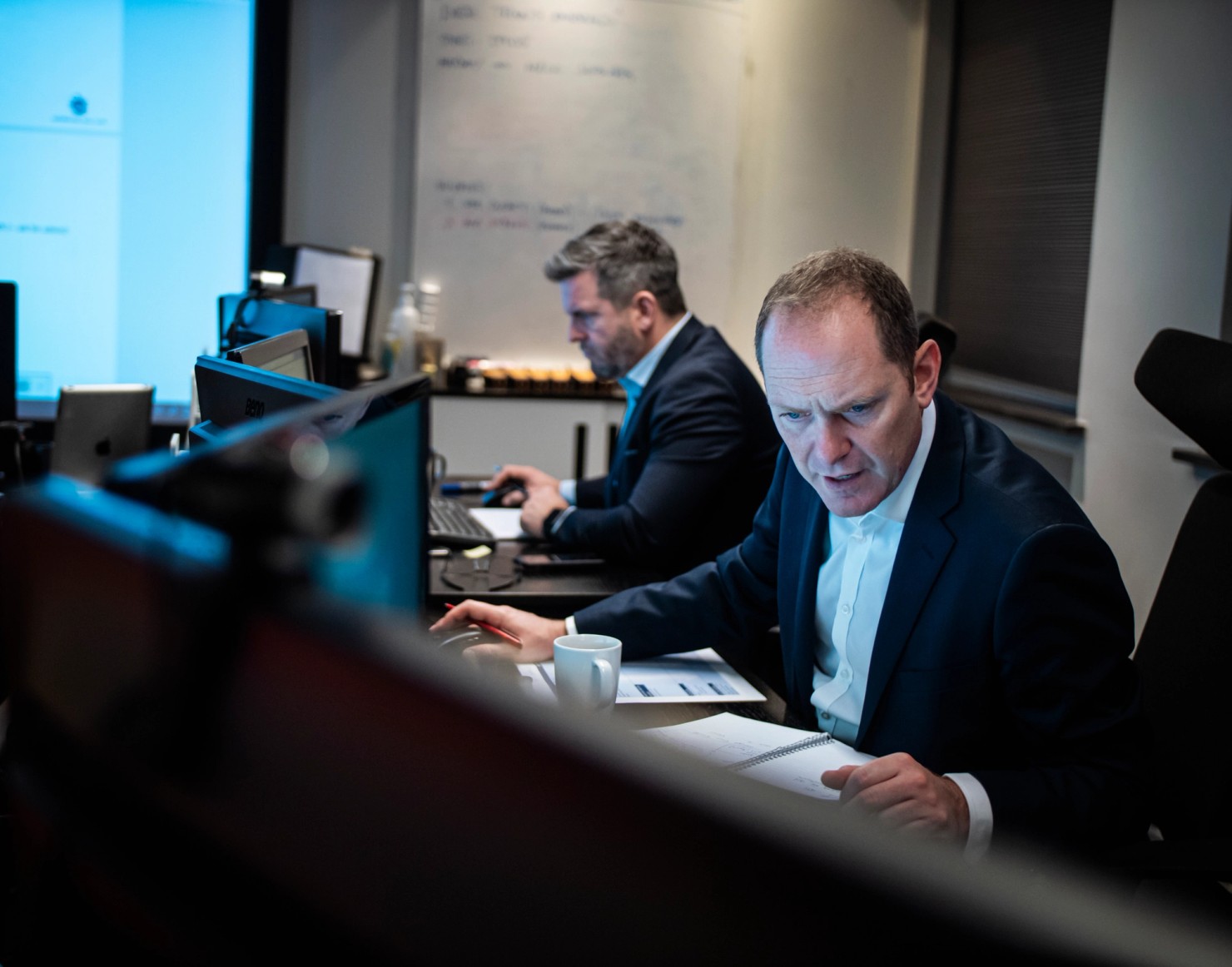
A Club for today and tomorrow
In the time since Norwegian Hull Club was founded, the world has witnessed severe fluctuations in financial market conditions. The demand for tonnage was very high prior to the financial crisis of 2008. Developing industrial countries and their demand for raw materials served as the driving forces behind the rapid growth in international shipping. Meanwhile, large-scale pirate activity emerged off the coast of Africa; such activity has seriously affected world trade and freedom of navigation alike.
Today, the mutual associations are - to a larger degree - part of the global economy and environment. In Norway, the mutual business model introduced more than 180 years ago is very much alive, catalysed through the sole mutual association left in the country: Norwegian Hull Club.
At the same time, the digital revolution has brought the offshore and onshore worlds closer. Now, vessels can be tracked in real time while news sources feed us worldwide weather warnings. It is this technology and the possibilities it brings with regard to proactivity and risk reduction that has – in part - enabled Norwegian Hull Club to position itself as a global leader in its sector.
The Club constantly anticipates future challenges when developing new and innovative ideas, yet we also look back on our extensive experience and decades of accumulated knowledge in the fields of marine and energy insurance.
As a mutual insurer, we deliver first-class service through close, long-term relationships with our valued clients – relationships built on mutual trust. We insure more than 11,000 units, handle some 2,500 claims annually and host more than 300 activities and exercises with our clients every year, including loss prevention programmes. We encourage transparency with core mutual values of “integrity”, “sharing”, “agile” and “curious” underpinning all our activities.
With Norwegian Hull Club, you can always Expect More.
Key dates
- 1837: Langesund Skibsassuranseforening established (later Den Første Norske Assuranceforening)
- 1850: Bergen Assuranseforening established
- 1864: Det Norske Veritas established
- 1871: First Norwegian Marine Insurance plan published
- 1915: Christianssands Skibsassuranseforening established
- 1920: 16 mutual insurance companies in Norway
- 1922: A merger of Den Første Norske Assurance-forening and Vidar
- 1935: Norwegian war risk insurance for ships
- 1937: Bg. Assuranse + Bg. Dampskipsassuranse (1879) form Bergen Skibsassuranseforening - (Bergen Skibs), later known as Bergen Hull Club
- 1951: A merger of Nora (1874) and Vidar (1879) form Skibsassuranseforeningen Unitas
- 1952: Unitas is the lead underwriter for 150 vessels
- 1963: 4 mutual insurance companies left in Norway; Arendal & Christiania, Bergen, Christianssand and Unitas
- 1973: Oil crisis
- 1973: Norwegian Oil Risk pool established (all 4 Norwegian companies)
- 1976: Unitas is the lead underwriter for nearly 900 vessels
- 1978: Bergen Skibs. has 313 vessels in its portfolio
- 1987: Bergen Skibs. has approximately 25 employees
- 1996: Unitas acquires the portfolio of Christianssand Skips (1915)
- 2001: Unitas and Bergen Skibs merge into Norwegian Hull Club
- 2006: The founding of Marine Benefits Assistance Services Inc
- 2008: Financial crisis
- 2008: P&I; Charterers’ liability and FD&D cover
- 2011: Norwegian Hull Club’s total change in solvency capital in 2010 was 49 million USD.
- 2012: 8000 vessels in portfolio. 115 employees in 3 offices; Bergen, Oslo and Kristiansand.
- 2016: New office in London
- 2018: The Club offers insurance for windmills
- 2019: Owners P&I; Protection and indemnity insurance for shipowners
- 2019: Norwegian Hull Club ranks as one of the world’s largest pure marine underwrites, with more than 10.000 vessels in portfolio and 125 employees.